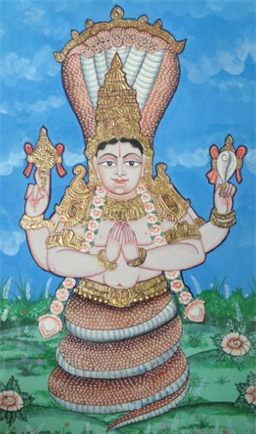
Patanjali
c. 2nd century BCE – 4th century CE (debated) · India
“Yoga is the cessation of the fluctuations of the mind.”
Patanjali compiled the Yoga Sutras — 196 aphorisms that constitute the most systematic and precise map of the contemplative life in the yoga tradition. His definitions of yoga (cessation of mental fluctuations), his eight-limbed path, his analysis of suffering through the five kleshas, and his cartography of samadhi remain the foundation of classical yoga across all schools. Precision and penetrating analysis are his hallmarks.
In Patanjali’s words
“When you are inspired by some great purpose, all your thoughts break their bonds; your mind transcends limitations, your consciousness expands in every direction.”
“The restraint of the modifications of the mind-stuff is Yoga.”
Ask Patanjali
Biography
Patanjali is the name traditionally given to the compiler (or author) of the Yoga Sutras, one of the most influential texts in all of Indian philosophy. The dating is contested — scholarly estimates range from the 2nd century BCE to the 4th century CE. Whether one individual or a compiler drawing on older source material, the Yoga Sutras stand as the definitive systematic text of what has been called Raja Yoga, Classical Yoga, or Ashtanga Yoga.
Almost nothing is known of Patanjali's biography. He is sometimes identified with the great Sanskrit grammarian Patanjali (author of the Mahabhashya commentary on Panini's grammar) and with an Ayurvedic author, but these identifications remain uncertain. His teaching speaks through the sutras themselves.
The Yoga Sutras consist of 196 aphorisms in four chapters: the Samadhi Pada (on the nature of yoga and samadhi), the Sadhana Pada (on practice), the Vibhuti Pada (on powers), and the Kaivalya Pada (on liberation). The text was meant to be memorized and expanded in teaching — the sutras are so compressed as to require commentary (bhashya) for full understanding. The most important ancient commentary is that of Vyasa (the Yoga Bhashya).
His foundational definitions are among the most important in all of Indian thought. Yoga is defined (YS 1.2) as "yogas citta vritti nirodha" — the cessation of the fluctuations (vrittis) of the mind-stuff (citta). The purpose: (YS 1.3) "tada drastuh svarupe avasthanam" — then the Seer (Purusha, pure consciousness) abides in its own nature. Without yoga (YS 1.4), the Seer takes on the form of whatever mental fluctuation is present — mistaking the contents of consciousness for consciousness itself.
The eight-limbed path (ashtanga, YS 2.29) — yama, niyama, asana, pranayama, pratyahara, dharana, dhyana, samadhi — proceeds from ethical foundation through physical and breath work, sense withdrawal, and the inner three limbs (samyama) toward the liberation of pure awareness (kaivalya).
The theoretical framework rests on a strict dualism: Purusha (pure consciousness, unchanging, the Seer) and Prakriti (nature, including mind, ego, and body). Suffering arises from avidya — the confusion of the two. Liberation (kaivalya) is their final, irreversible discrimination.
Patanjali's influence on all subsequent yoga — Vedantic, Tantric, and modern — has been incalculable. Every yoga school must take a position on him.
Primary sources & resources
You may also wish to speak with
- Gautama Buddha — The middle path leads to cessation of suffering.
- Eckhart Tolle — Realize deeply that the present moment is all you ever have.
- Swami Vivekananda — Arise, awake, and stop not till the goal is reached.
- Adi Shankaracharya — Brahman alone is real; the world is appearance.
- St. Teresa of Ávila — Let nothing disturb you. Let nothing frighten you. All things pass. God does not change. Patience achieves everything.
- Adyashanti — The truth is that you already are what you are seeking.